How Long Do Fire Extinguishers Last? Understanding Service Life and Replacement Requirements
Fire Extinguisher Lifespan: When to Service, Recharge, or Replace
Many business owners assume that once a fire extinguisher is installed, it will remain reliable indefinitely as long as it passes its annual inspection. In reality, every fire extinguisher has a service life, and understanding when an extinguisher should be replaced is just as important as scheduling inspections and maintenance.
A fire extinguisher is a pressurized piece of life safety equipment that may sit unused for years before it is needed. During that time, internal components can deteriorate, seals can wear out, pressure can be lost, and the cylinder itself may eventually reach the end of its safe operating life. While regular inspections and maintenance help extend the usefulness of an extinguisher, they do not make it last forever.
For businesses throughout Dallas, Collin County, Denton County, Tarrant County, and Ellis County, knowing when to repair, recharge, hydrostatically test, or replace a fire extinguisher is an important part of maintaining compliance with fire codes and protecting employees, customers, and property.
This guide explains the expected lifespan of commercial fire extinguishers, factors that affect longevity, warning signs that indicate replacement is necessary, and best practices for managing fire extinguishers throughout their service life.
Do Fire Extinguishers Expire?
One of the most common misconceptions is that every fire extinguisher automatically expires after a certain number of years. The reality is a little more complicated.
Most commercial fire extinguishers do not have a simple expiration date. Instead, they have a service life that depends on:
- The type of extinguisher
- The manufacturer's recommendations
- Whether the extinguisher has been properly maintained
- Whether it passes required inspections
- Whether it successfully completes hydrostatic testing
A well-maintained extinguisher may remain in service for many years, while one that has been damaged or neglected may need replacement much sooner.
Typical Service Life of Commercial Fire Extinguishers
Although every extinguisher is different, many commercial models remain in service for 10 to 20 years or longer when properly maintained.
Several factors determine whether an extinguisher can remain in service, including:
- Annual maintenance history
- Hydrostatic testing results
- Physical condition
- Availability of replacement parts
- Manufacturer support
An extinguisher that continues to meet inspection requirements may remain compliant long after ten years of service.
Disposable vs. Rechargeable Fire Extinguishers
Understanding the difference between disposable and rechargeable extinguishers is important.
Disposable Fire Extinguishers
Disposable extinguishers are typically found in:
- Homes
- Small offices
- Personal vehicles
These extinguishers cannot be refilled or repaired once discharged or damaged. When they lose pressure or are used, they must be replaced.
Rechargeable Fire Extinguishers
Most commercial buildings use rechargeable extinguishers.
These units are designed to:
- Be professionally serviced
- Be recharged after use
- Receive annual maintenance
- Undergo hydrostatic testing
- Remain in service for many years
Rechargeable extinguishers generally provide a much longer return on investment than disposable units.
What Determines How Long an Extinguisher Lasts?
Several factors influence service life.
Quality of Maintenance
Professional maintenance helps identify problems before they become serious.
Routine servicing includes checking:
- Pressure
- Internal components
- Hose condition
- Safety pin
- Valve assembly
- Corrosion
Businesses that stay current with maintenance often keep extinguishers in service much longer.
Environmental Conditions
The environment where an extinguisher is installed can significantly affect longevity.
Examples include:
- Outdoor exposure
- High humidity
- Salt air
- Chemical environments
- Extreme temperatures
Restaurants and industrial facilities often experience more demanding conditions than office buildings.
Physical Damage
Fire extinguishers are frequently installed in areas where they may be bumped by:
- Forklifts
- Carts
- Cleaning equipment
- Vehicles
- Heavy inventory
Even minor dents or impact damage may require professional evaluation.
Signs That a Fire Extinguisher May Need Replacement
Business owners should never assume an extinguisher is safe simply because it is hanging on the wall.
Common warning signs include:
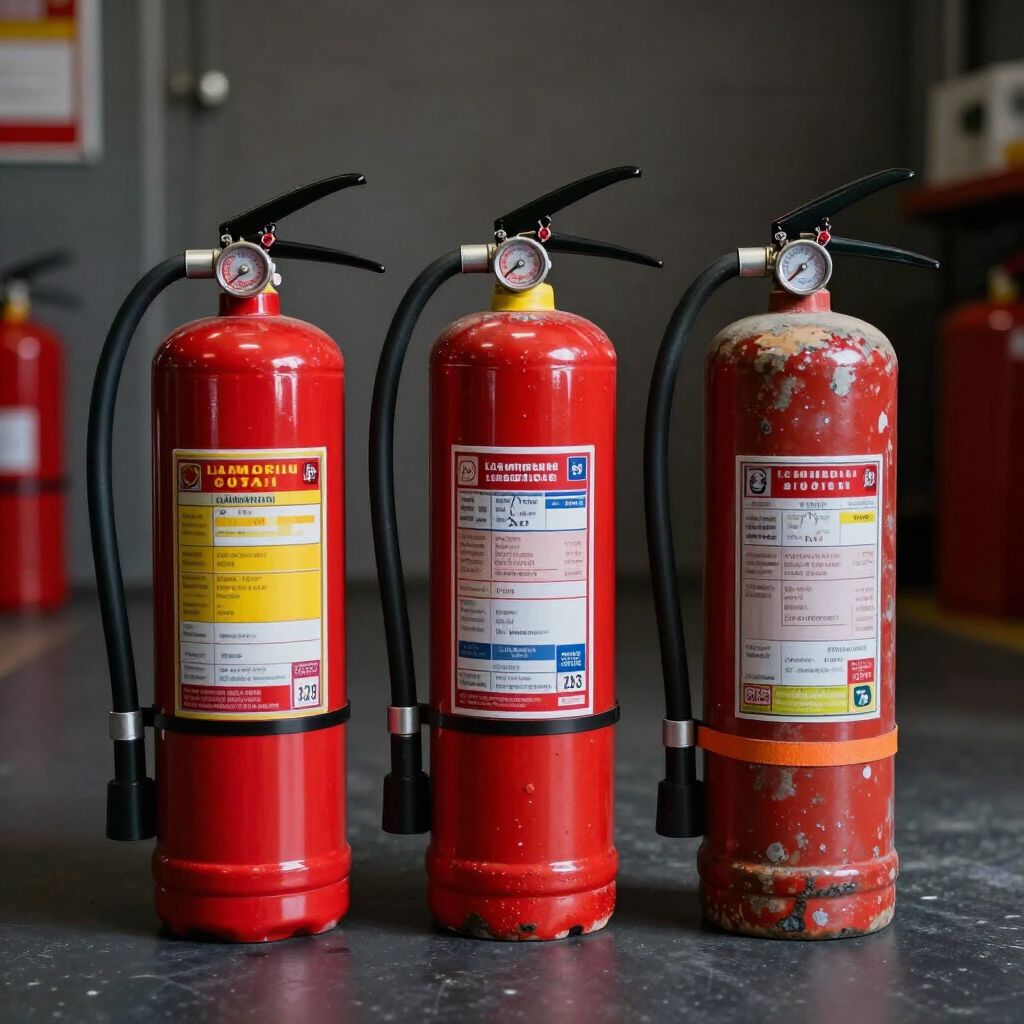
- Rust or corrosion
- Dented cylinder
- Broken handle
- Missing safety pin
- Damaged hose
- Missing inspection tag
- Illegible labels
- Low pressure gauge reading
- Evidence of leakage
Any of these conditions should be evaluated by a qualified fire extinguisher technician.
Can an Old Fire Extinguisher Be Repaired?
Sometimes.
Professional technicians can often repair issues such as:
- Broken tamper seals
- Missing inspection tags
- Worn hoses
- Valve replacement
- Pressure loss through recharging
However, structural damage usually cannot be repaired safely.
If the cylinder itself is compromised, replacement is generally required.
When Hydrostatic Testing Extends Service Life
Hydrostatic testing is one of the most important milestones in an extinguisher's life.
Rather than replacing an extinguisher simply because it reaches a certain age, technicians perform hydrostatic testing to verify that the cylinder remains structurally sound.
If the extinguisher passes testing, it may continue in service.
If it fails, it must be permanently removed from service.
Hydrostatic testing helps businesses maximize the lifespan of their equipment while maintaining compliance.
Why Replacing an Extinguisher Too Late Can Be Expensive
Waiting until an extinguisher completely fails often creates additional problems.
Potential consequences include:
- Fire code violations
- Failed inspections
- Emergency replacement costs
- Business interruptions
- Re-inspection fees
- Increased liability
Replacing equipment before it becomes a compliance issue is generally the most cost-effective approach.
Common Industries That Benefit From Replacement Planning
Nearly every commercial property benefits from tracking extinguisher age, but replacement planning is especially valuable for:
- Restaurants
- Schools
- Churches
- Apartment communities
- Warehouses
- Manufacturing facilities
- Medical offices
- Retail stores
- Office buildings
- Property management companies
Businesses with dozens of extinguishers often create replacement schedules to avoid replacing large numbers of units at the same time.
Should You Replace One Extinguisher or All of Them?
Not necessarily.
Each extinguisher should be evaluated individually.
Factors considered include:
- Age
- Maintenance history
- Hydrostatic testing dates
- Physical condition
- Location
- Type of hazard protected
Many businesses replace extinguishers gradually as they reach the end of their service lives.
Benefits of Working With a Professional Fire Protection Company
Managing fire extinguishers across an entire facility can become complicated.
A professional fire protection company helps businesses:
- Track equipment age
- Schedule inspections
- Monitor hydrostatic testing
- Recommend replacements when appropriate
- Maintain documentation
- Stay compliant with local fire codes
This proactive approach reduces unexpected failures and helps businesses prepare for fire marshal inspections.
Supporting Businesses Across North Texas
Since 2010, AllStar Fire Extinguisher Service has helped businesses throughout Dallas County, Collin County, Denton County, Tarrant County, and Ellis County maintain compliant fire protection equipment. Services include fire extinguisher sales, installations, inspections, maintenance, hydrostatic testing, exit and emergency signage, and fire extinguisher training classes.
Whether a business needs to replace one extinguisher or develop a long-term equipment management plan for multiple locations, working with an experienced local provider helps simplify compliance and improve workplace safety.
Frequently Asked Questions
How long does a commercial fire extinguisher usually last?
Most rechargeable commercial fire extinguishers can remain in service for 10 to 20 years or longer if they are properly maintained and continue to pass inspections and hydrostatic testing.
Do fire extinguishers need to be replaced after they are used?
Most commercial rechargeable extinguishers can be recharged after use. Disposable extinguishers generally must be replaced.
Can an extinguisher pass its annual inspection but still need replacement?
Yes. Physical damage, failed hydrostatic testing, obsolete components, or manufacturer recommendations may require replacement even if routine inspections have been completed.
What happens if an extinguisher fails hydrostatic testing?
An extinguisher that fails hydrostatic testing must be permanently removed from service and replaced because the cylinder is no longer considered safe.
How can businesses keep track of replacement schedules?
Many businesses work with a professional fire protection company that maintains service records, inspection dates, hydrostatic testing schedules, and equipment history to help plan replacements before compliance issues arise.
Final Thoughts
Fire extinguishers are designed to provide years of reliable protection, but they are not lifetime devices. Regular inspections, professional maintenance, hydrostatic testing, and timely replacement all play an important role in ensuring they will operate correctly during an emergency.
For businesses throughout North Texas, understanding the service life of fire extinguishers is more than a maintenance issue—it is a key part of protecting employees, customers, property, and maintaining compliance with fire safety regulations.
Recent Posts