Exit & Emergency Sign Requirements for Commercial Buildings in Texas
A Guide to Exit and Emergency Sign Compliance for Texas Businesses
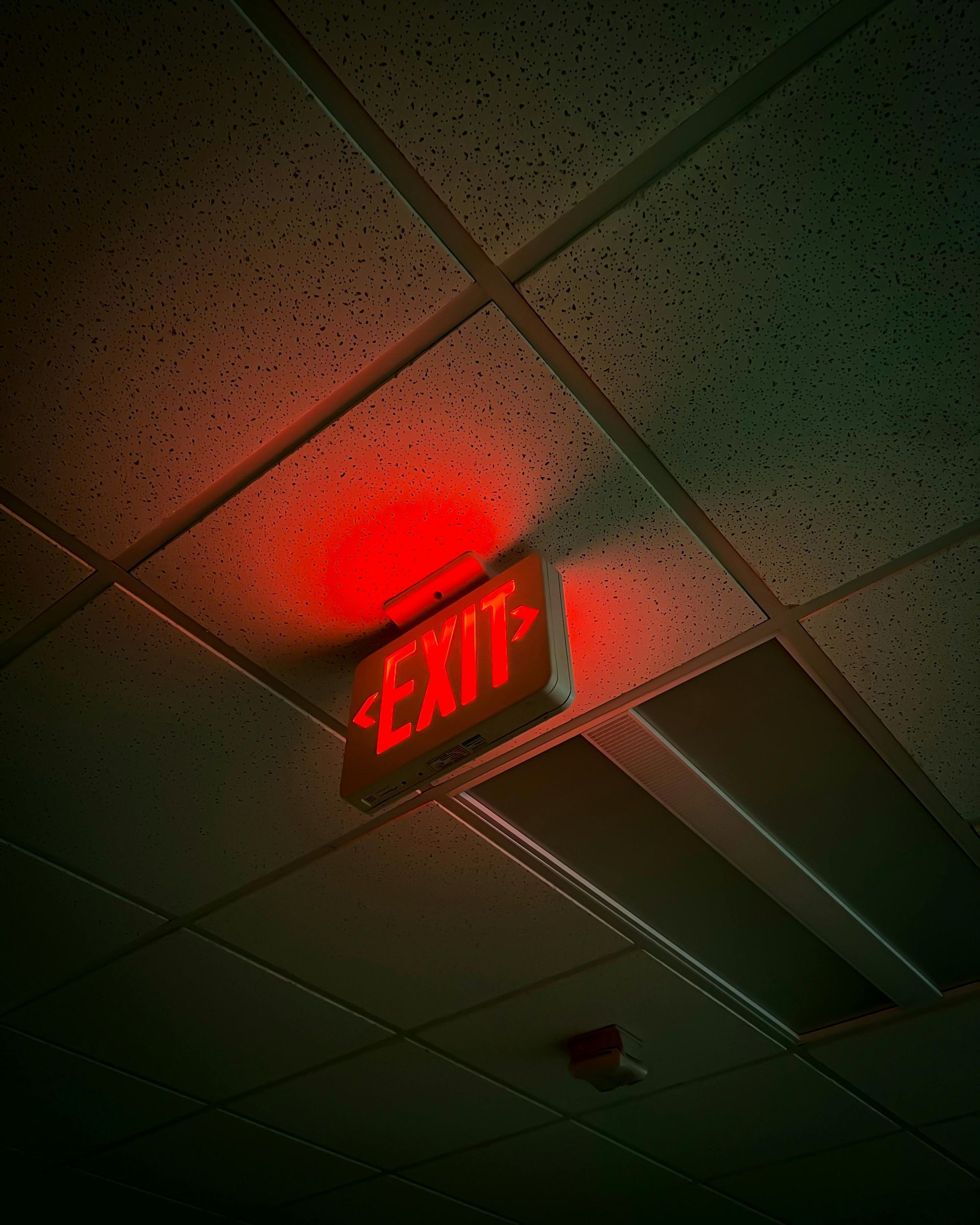
Exit signs and emergency lighting are among the most visible life safety features in any commercial building, yet they are also some of the most frequently cited violations during fire marshal inspections in Texas. Business owners often assume that if a sign is illuminated, it is compliant—but fire code requirements go far beyond simple visibility.
In Texas, commercial buildings must install, maintain, and inspect exit signs and emergency lighting systems according to specific standards. These systems are designed to guide occupants safely out of a building during emergencies such as fires, power outages, or other hazardous events. Noncompliance can result in failed inspections, fines, and increased liability.
This guide explains Texas exit and emergency sign requirements, where signs must be placed, how they must function, and how businesses can stay compliant year-round.
Who Regulates Exit and Emergency Sign Requirements in Texas?
Exit sign and emergency lighting requirements in Texas are based on national life safety standards and enforced at the local level.
The Texas State Fire Marshal’s Office adopts and enforces fire and life safety regulations across the state. These regulations are based largely on standards developed by the National Fire Protection Association, particularly NFPA 101, also known as the Life Safety Code.
Local fire marshals in cities and counties throughout Texas rely on these standards when inspecting commercial properties.
What Are Exit Signs?
Exit signs are illuminated or self-lit signs that clearly mark the location of exits in a building. Their primary purpose is to guide occupants to safety during emergencies, especially when visibility is reduced due to smoke or darkness.
Exit signs must remain visible at all times and function properly even during a power failure.
Which Buildings Require Exit Signs in Texas?
Exit signs are required in most commercial and public buildings, including:
- Office buildings
- Retail stores and shopping centers
- Restaurants and bars
- Warehouses and industrial facilities
- Medical and dental offices
- Schools, churches, and assembly spaces
- Apartment buildings with interior corridors
Any building with designated exit routes must have compliant exit signage.
Exit Sign Placement Requirements
Proper placement is one of the most common compliance issues identified during inspections.
Where Exit Signs Must Be Installed
Exit signs are required:
- Above or near exit doors
- Along exit access corridors
- At changes in direction where the exit path is not obvious
If an exit or exit route is not immediately visible, directional exit signs must be installed to guide occupants.
Visibility Requirements
Exit signs must be:
- Clearly visible from any direction of travel
- Free from obstructions
- Positioned so they are not hidden by décor, shelving, or equipment
Fire marshals frequently cite blocked or poorly placed exit signs.
Illumination Requirements for Exit Signs
Exit signs must be continuously illuminated whenever the building is occupied.
Power Supply Rules
Exit signs must be powered by:
- The building’s normal electrical system
- A battery backup or emergency power source
If normal power fails, exit signs must remain illuminated for a minimum duration, typically at least 90 minutes.
Types of Exit Signs
Common exit sign types include:
- Electrically powered signs with battery backup
- Self-luminous signs
- Photoluminescent signs (where approved)
Not all sign types are permitted in every occupancy, so local code requirements must be followed.
d start typing your own or paste your own from a different source.
Emergency Lighting Requirements
Exit signs work together with emergency lighting systems to ensure safe egress during emergencies.
What Is Emergency Lighting?
Emergency lighting provides illumination along exit routes when normal power is lost. This includes lighting in:
- Corridors
- Stairwells
- Exit doors
- Areas leading to public ways
Where Emergency Lighting Is Required
Emergency lighting is typically required in:
- Buildings with interior exit routes
- High-occupancy spaces
- Areas where sudden darkness could create hazards
Emergency lighting must activate automatically during power failure.
Testing and Inspection Requirements
Exit Sign Inspections
Exit signs must be inspected regularly to ensure:
- Illumination is functioning
- Letters are clearly visible
- Battery backups operate correctly
Burned-out bulbs, faded lettering, or damaged housings are common violations.
Emergency Lighting Testing
Emergency lighting systems must be tested periodically to verify that backup power functions as required. Testing typically includes:
- Short-duration functional tests
- Longer-duration operational tests to confirm runtime
Documentation of testing may be required during inspections.
Common Exit and Emergency Sign Violations in Texas
Fire marshals frequently cite the following issues:
- Exit signs not illuminated
- Missing exit signs above exit doors
- Blocked or obscured signage
- Dead or failing backup batteries
- Emergency lights that do not activate during power loss
- Improper sign placement
These violations are often discovered during routine inspections and are usually correctable, but repeated issues may result in penalties.
How Exit and Emergency Sign Compliance Is Enforced
During a fire marshal inspection, officials may:
- Walk exit routes to verify visibility
- Test emergency lighting and exit sign illumination
- Check battery backup functionality
- Review maintenance and testing records
If deficiencies are found, the business may be required to correct them within a specified timeframe and schedule a re-inspection.
How Exit Sign Compliance Affects Fire Inspections
Exit and emergency signage are considered life safety features, meaning they receive close scrutiny during inspections. Even if fire extinguishers and alarms are compliant, signage violations alone can result in a failed inspection.
Maintaining compliant signage reduces delays, re-inspection costs, and operational disruptions.
The Importance of Routine Maintenance
Exit signs and emergency lighting systems experience wear over time. Batteries degrade, bulbs fail, and fixtures can be damaged.
Routine maintenance helps ensure:
- Continuous compliance
- Reliable operation during emergencies
- Fewer surprises during inspections
Businesses that rely on periodic professional service often experience fewer violations.
Managing Compliance Across Multiple Locations
Businesses with multiple properties face added challenges in tracking signage compliance. Many choose to work with a single service provider to manage:
- Installation
- Routine inspections
- Battery replacement
- Repairs and upgrades
This approach simplifies compliance and reduces administrative oversight.
Supporting Exit and Emergency Sign Compliance in North Texas
AllStar Fire Extinguisher Service has supported businesses across Dallas, Collin, Denton, Tarrant, and Ellis Counties since 2010. In addition to fire extinguisher services, AllStar provides exit and emergency sign installation, inspection, and maintenance to help businesses meet life safety requirements and pass inspections with confidence.
Final Thoughts
Exit signs and emergency lighting play a vital role in protecting occupants during emergencies. Texas fire codes establish clear requirements for placement, illumination, backup power, and maintenance, and local fire marshals actively enforce these standards.
Businesses that understand and maintain exit and emergency sign compliance reduce risk, improve safety, and avoid unnecessary inspection failures. Consistent maintenance and professional support help ensure these systems function properly when they are needed most.
Recent Posts